• A survey conducted by E&Y recently unanimously pointed to Ambiguity and Leadership gaps as the primary reason for Burnout at workplace. While there needs to be focus on how this can be ‘prevented’, recovering from burnout involves proactive self-care.

    Today’s Self- care series will focus on quick tips to navigate Burnout.

    Share your experience here on how effective these were.

  • “Ownership is the difference between teams that wait — and leaders who win.”

    In today’s workplace, projects stall not because of lack of talent, but because of lack of ownership. Taking ownership means stepping beyond job descriptions and embracing accountability for outcomes. It’s the mindset shift from “That’s not my responsibility” to “How can I make this happen?”

    For organizations:

    Ownership builds trust, accelerates execution, and reduces the endless cycle of follow‑ups.

    For individuals:

    It’s the key to career growth — when you own your choices, your learning, and your impact, you stop being reactive and start being intentional.

    Ownership is proactive: spotting risks before they escalate, stepping up when challenges arise, and celebrating wins as collective achievements.

    3 simple opportunities to demonstrate ownership:

    • Own the Outcome, Not Just the Task :
      • Don’t stop at “I finished my part.”
      • Take responsibility for the end result — ensuring the project or deliverable achieves its intended impact.
      • Example: If you submit a report, check that it’s usable and adds value, not just completed.
    • Speak up about risks early
      • Ownership means flagging issues before they become escalations.
      • Share blockers, propose solutions, and keep stakeholders informed.
      • Example: “We may miss the deadline unless we reprioritize — here’s my suggestion.”
    • Follow through consistently
      • Ownership is visible when you close the loop.
      • Update others on progress, confirm completion, and celebrate outcomes.
      • Example: After a meeting, send a quick note: “Action item completed — here’s the result.”

    These are small but powerful signals that build trust and credibility.

    What’s your biggest challenge with taking ownership — at work or in life? Drop it in the comments. Let’s spark a conversation.

  • Every workplace recipe for success has one ingredient that’s often overlooked: you. Not your title, not your KPIs, not even your team size — but the unique energy, perspective, and ownership you bring to the table.

    In organizations, projects thrive when individuals take ownership of outcomes, not just tasks. The ingredient called you is what transforms a checklist into impact. Your ability to listen, adapt, and lead with authenticity is the secret sauce that keeps teams motivated and aligned.

    In life, the same principle applies. Goals don’t move forward because of external circumstances; they move because you decide to act, to persist, and to renew your strength when challenges arise. Self‑belief, resilience, and accountability are not abstract concepts — they are daily choices.

    When you recognize that you are the differentiator, you stop waiting for permission and start creating momentum.

    So, here’s my question for you: In your workplace or personal life, where do you think the ingredient called you has made the biggest difference? Share your thoughts in the comments — let’s start a conversation on how individuals drive collective success.

  • Wondering how to differentiate yourself from the group? Below are a few small habits to build Confidence at work, make yourself stand out!

    Pick one of these steps and do it consistently every day (at least 3-4 times this week). If you miss, no worries, try again at the next opportunity that day or the next day.

    Transformation starts small – One step at a time

    Quick guide to Confidence building

  • I still remember my first tough conversation as a manager – when giving feedback to a team member about an activity assigned. My heart raced, my mind rehearsed a dozen versions of what to say… and yet, when the moment came, silence felt safer.

    In the early days, most of us avoid the uncomfortable, hoping it will fade. But it never does. This awkward feeling is not restricted to managers only, today almost every Tech Focal or senior member in the team who is guiding other team members has been tasked to “lead without authority”, to “influence the team” who do not report to them.

    Difficult conversations like feedback, questioning or improving the quality of outcomes, etc. feel heavy because:
    1. Emotions cloud the room
    2. Facts get tangled with feelings
    3. Fear whispers: “What if I break trust?”

    Over time, I learned this truth: Praise makes you liked. Courage in conflict makes you trusted.

    Below are a few pointers on how to prepare for difficult conversations.

  • “Has this transformation improved how we work, deliver value, and engage people?” If the honest answer is no, the initiative has failed — even if the program is technically “complete.”

    The most common pitfalls during organizational transformation are resistance to change, lack of clear alignment, leadership gaps, and burnout. These issues often derail even well‑planned initiatives, leading to stalled progress, wasted resources, and cultural erosion. Below image gives a view of the common pitfalls in an Org Transformation initiative and its impact.

    How to Mitigate?

    1. Communicate the “why” clearly — tie transformation to business outcomes.
    2. Invest in change leadership — visible sponsorship and consistent direction.
    3. Address culture early — embed new behaviours into daily work.
    4. Manage pace — balance urgency with employee well‑being.
    5. Track milestones realistically — avoid overpromising timelines and budgets.


    In short, transformation fails not because of poor ideas but because of employee, cultural, and leadership alignment gaps. The organizations that succeed are those that treat transformation as both a strategic and behavioural journey, not just a structural one.

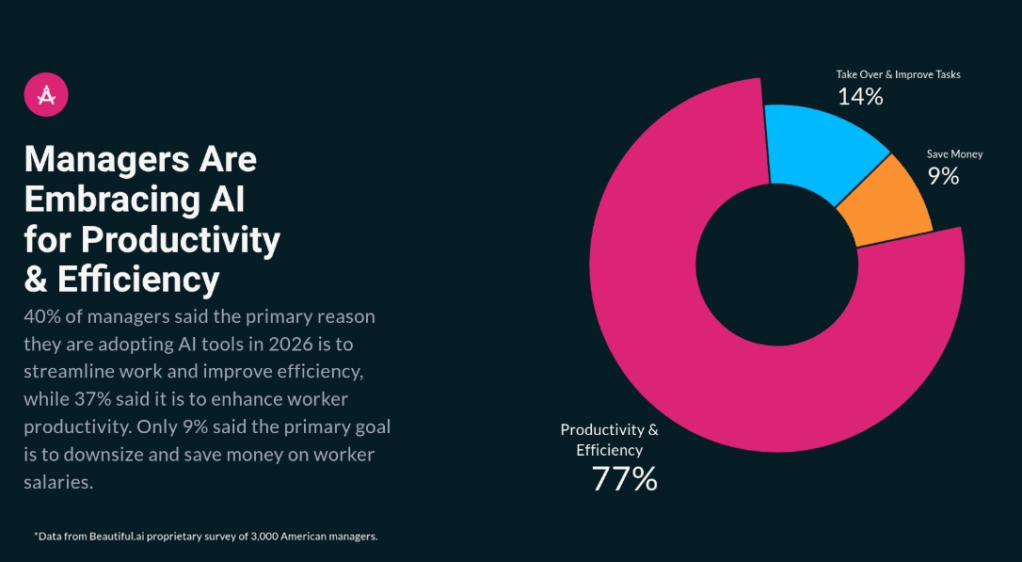
  • “Did your team start using the AI tool? If yes, what is our savings in $? What is the downsizing target with the use of agents?”

    These are the common questions we are hearing across organizations. There is a top-down push (and pressure) in organizations to adopt AI and show productivity, mid-level managers are pushed on either side, with anxiety hitting them from both sides – their teams who are looking for guidance on the ‘how-to’ part and upstream – the Executive leadership asking the ‘How-much’ question. What is the best path forward?

    As the rubber meets the road on AI integration into Products as features or embedded in your day-to-day business process flows – it is no longer about getting a fancy certificate in AI. There is a lot more hands-on experience to be demonstrated, in terms of how you will consume the tools provided, to move forward – both for yourself and for your teams.

    This is exactly the focus of my flagship program ‘Leading teams right with AI’ – where we go over the AI landscape of your Organization, in particular, the expectations set with you and your team, to help equip you as a leader to guide your teams with right approach and manage upstream leadership communication, with the right metrics to reflect on outcomes achieved.


    If you are a Manager anxious about riding the AI wave and figuring out the ‘how-to’ with AI for your teams – let us talk!

  • “Before the big event of her company, the leader closed her cabin door, cried her heart out”.

    A Top MNC leader recently in her book, shared that in moments of overwhelm, she shut her cabin door, cried her heart out, then composed herself before stepping back into the spotlight.

    Leadership isn’t easy. Vulnerability at work often carries a stigma—seen as weakness or “not fit to lead.” This forces leaders to swallow big emotions, sometimes at the cost of their own well‑being.

    What’s missing? Safe spaces. Support circles. Lean‑in groups where leaders can share struggles without fear of judgment. Instead, workplaces remain battlefields—cut or get cut—leaving leaders to rise or fall alone. This stigma makes our leaders gulp the ‘big emotions’ sometimes at the cost of choking themselves up.

    The Silent Struggles of Leaders
    1. Preparing for a performance review they know won’t go well takes immense emotional prep.
    2. Giving “constructive feedback” to a team member who refuses to accept any feedback is draining.
    3. Delivering layoff news often paints leaders as heartless. Yet behind the scenes are sleepless nights, numerous failed attempts to protect jobs, and the pain of letting go of people they once groomed.
    4. Shielding the team from friction resulting in being perceived as ‘taking away all credit’

    You may see a tough leader delivering hard news. What you don’t see are the sleepless nights, the countless attempts to fix a bad decision, or the endless cups of coffee just to stay steady for that conversation. Even when they disagree, leaders show up, hold ground, and align—because that’s part of the deal. Behind the composed exterior lies resilience, sacrifice, and the weight of choices few ever witness.

    Call To Action:
    1. Acknowledge – It’s OK for leaders to be vulnerable. We don’t need superheroes, just approachable leaders who guide teams to success.
    2. Empathize – Leaders aren’t monsters; they’re people doing their best with the resources they have.
    3. Reach Out – Check in on your leaders. A simple “Are you okay?” matters – especially when they’re alone at the top.
    4. Build Systems – Organizations must create support circles and frameworks that help leaders thrive, connect, and grow.

    If you are one of the leaders trying to hold space or a decision maker trying to make leaders thrive, but are trying to figure out the ‘how’ – drop me a note, let us talk!

  • This one focuses on the journey of Transformation and scaling that organizations, startups take.

    Transformation isn’t a project—it’s a mindset. Organizations today face constant disruption: scaling teams, integrating AI, shifting cultures. True transformation is about building resilience, not just reacting to change.

    At its core, transformation rests on three pillars:
    1. People – Empowering leaders and employees to adapt, learn, and thrive.
    2. Process – Redesigning systems to scale effectively, without breaking under growth.
    3. Technology – Leveraging tools (including AI) that integrate seamlessly into the ecosystem, sustaining quality and innovation.

    Miss one pillar, and transformation collapses. Get them aligned, and you unlock agility, engagement, and long‑term impact.


    The question isn’t if organizations must transform—it’s how fast and how well. Transformation is not about change for change’s sake. It’s about creating ecosystems where people, process, and technology move in sync.

  • Vulnerability is a big word. Let us understand what this means first. “Vulnerability in the workplace” is the ability to express your true thoughts and feelings authentically, fostering trust, connection, and effective leadership. It involves openly sharing emotions, admitting struggles, providing honest feedback, and participating in difficult conversations without fear of judgment or repercussions.

    Leaders and employees who embrace vulnerability demonstrate emotional intelligence, authenticity, and trustworthiness, which are essential for modern organizational success.

    Part B will cover Vulnerability from a Leader’s perspective.

    “Tears rolled down my cheek, I cried that day, at office, much to my own embarrassment’.

    This was my own experience in my first job. A mistake made from me in a project design, made my senior lose her credibility with a consultant, making her furious. My senior blasted me, in front of the entire office. Being a few months old in the company and recently out from college, I could not contain the tears that rolled down my cheek. I rushed out, not wanting others to see me cry at work. This experience is still vivid in my memory. I did have a few other ‘breakdown moments’ later in my career as well – but very few (not because I ‘mastered perfection’, but because you tend to learn to hold back on tears, though certain situations trigger you).

    This is us being vulnerable. And no, vulnerability does not imply weakness, it only means, you are Human! How many of you relate to this in your own work life? It need not always be tears, it can be an instance where you felt underestimated, humiliated, unheard or even betrayed (someone close got the promotion you looked forward to, etc).

    Prelude to this post: Vulnerability at workplace is a good thing – because it shows you are human!

    Each of us, as humans have moments, where we deal with ‘big emotions’ (this term is not only for children but for adults as well). We have this stigma around ‘big emotions’ at workplaces – some say it makes us look weak, people call us ‘sensitive’, ‘too emotional’ and we are given free advice of ‘harden up’, ‘become strong’, etc.

    The Good news?

    To err is to be human and having ‘big emotions’ about a mistake, about a lost opportunity, about even missing a deadline – It is ABSOLUTELY OK. Does this mean, every mistake can be overlooked? No. But it does mean, that the mistake is not the end of the world. We learn from our mistakes, make course correction and move forward from it. No need of beating yourself up about an instance for months or years to come.

    Call to Action:

    1. Awareness: The difference each of us should be aware of is – at our workplaces, we have a mix of people in terms of how they handle the ‘Big emotions’. There are people who: (a)Feel more (any feedback discussion may end in a breakdown) (b) People who are able to hold back (process it at a later time) (c) People who may suppress it completely (only to explode at a different moment, for a relatively smaller trigger!) We need to be aware of the spectrum and where our team members fit in this, when we interact with them.
    2. ‘No judgement zone’ from each of us – as we allow and hold space for our colleagues/ peers to deal with these Big emotions the way they do. Just being there helps, no need of comforting words or gestures, just be there.
    3. The ‘Feelers’: If you are one of the ‘feelers’ who breaks down at the slightest deviation of a plan – it is OK. Let it out. But with time, make sure to build that trusted group of colleagues who can become the safe space, where you can let it out. With time, you will learn to modulate yourself better. Modulation is needed and is sufficient, suppression is not the ask here.

    While it is important for team members and colleagues to be aware of how to deal with members who feel these emotions closely, it is also important to sensitize the leaders in the organization who work with these members. More on #Vulnerability in Leaders in my next post.

    If you are one of the Feelers, trying to figure out how to modulate the big emotions – drop me a note, happy to help!