• *Refresher*
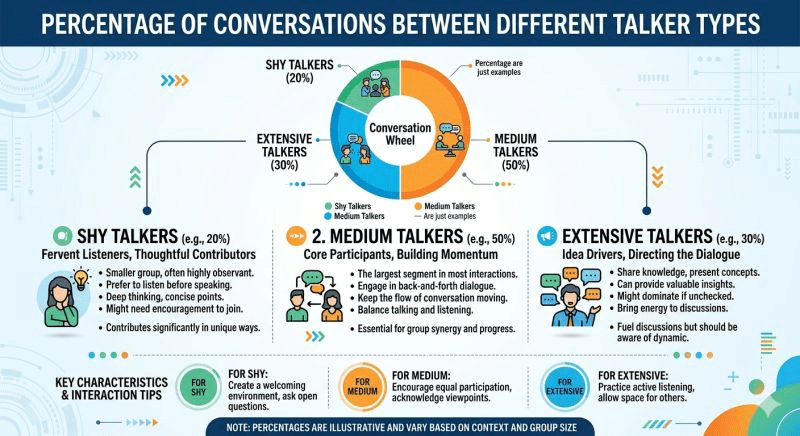
    State A: Conversation Shy
    State B: Get to a point of exchanging niceties (Hi / How are you / I am good / Have a good day)
    State C: Natural conversationalist (good at having a dialog and probably a successful dialogue as well)

    As promised, here are simple easy-to-try steps to help you transition from being State A (Conversation-shy) to State B (starting/sustaining a brief conversation). Look forward to hearing your experience after you try the below!

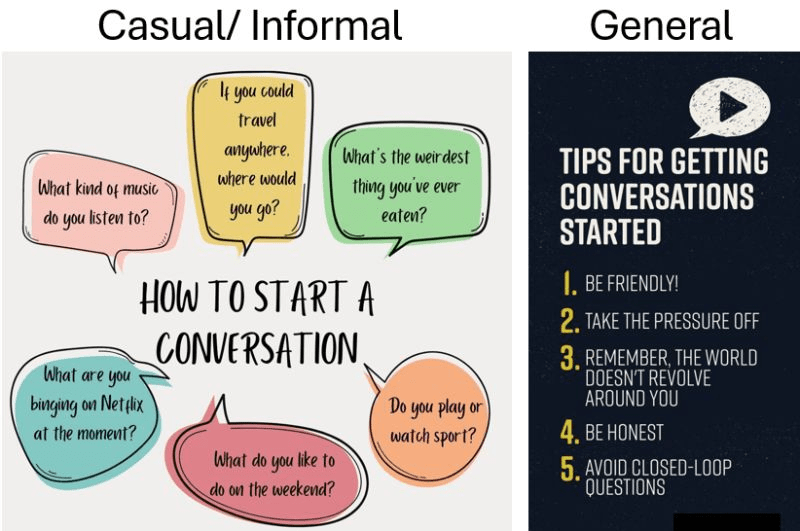
    1. Start small – Say a quick “hi” or add one short comment. Example: If someone says, “I love coffee,” you can reply/add, “Me too, I can’t start my day without it.”

    2. Listen first – Pay attention, then respond to something you hear. Example: If a friend talks about their weekend trip, you can say, “That sounds fun! Where did you go?”

    3. Keep a go-to topic – Have one safe subject ready to share (like movies or food / in some locations – this safe or neutral subject is the weather). Example: If there’s a pause, you can say, “Have you watched any good movies lately?”

    This way, you’re easing into conversations naturally without pressure, and each step gives you something simple to try.

    Note: Throwback to my first job – during my induction program, I was making this transit from State A to B (new group, new terrain). In my practice of above steps for the transition, I asked ‘Do you like movies?’. Unfortunately, the response I got was ‘No’. But since I had memorized the questions, I went ahead with my planned next question ‘Who is your favorite actor?’ 😀
    Take away: Do improvise in real time, based on responses you get!

    Conversations – Where do you belong?

    Today, I want to leave you with a simple metric – refer to the image here.

    State A and State B people constitute about 70% of the total audience. This gives us hope that we are not outliers in these 2 states, but experience what bulk of our peers / colleagues do! All it takes is conscious effort to take that one small step each day. Are you ready to take that step?

    Happy conversations!
  • P.S: Heard back from some of you on what adjective you have chosen. Waiting to hear from many of you still. DM me on what you have identified or if you need inputs on what best suits you!

    After introduction, we move to the conversation. Each of us have a different style of conversations, some of us are brief and structured, some are more conversational and free flowing, while a few of us are conversation shy – preferring to be left to ourselves.

    What category do you think you are a part of? When in a group or when a colleague is walking towards you, what is your first instinct? Do you try to:
    1. Run / evade OR
    2. Exchange niceties before moving away OR
    3. You break into a talk as if you know each other for years


    Being aware of your personality in terms of communication goes a long way in determining how you will grow in the organization and if there is any enablement needed in terms of guidance/ quick tips & tricks, etc.

    I will share more on how to handle each situation listed above in a Part2 of this post.

  • “His Job title has become his Identity! I have retired, now what happens to my identity? Even my wife has a fancy title these days – she is a homemaker”. This was a point raised by a friend’s parent recently.

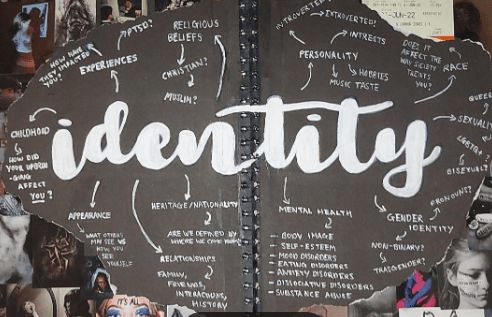
    Valid point, brings to light an interesting perspective – How do you identify yourself today?

    What do you hear in an introduction these days? It is mostly people rattling their job titles. ‘Director, Manager, Architect’. These titles are not permanent, as we have come to see in some industries, over the last couple of years!

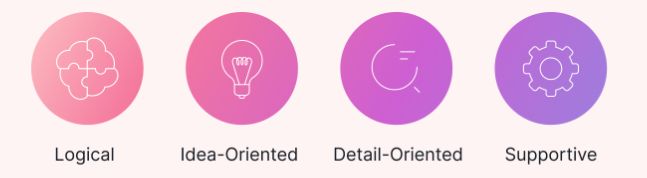
    “Your job is part of what you do, not who you are”. It is time each of us reflect on who we are (a limited introspection if you will), think of 3 Adjectives (fun / adhoc / crazy / poised / anything!) that you can associate to yourself? It is time we start looking at our own identity beyond our job titles – really dig into who we are as individuals.

    Next time you introduce yourself to someone (anyone) – pay attention to what you say. Consciously try to add atleast ONE adjective in your introduction that is beyond your job role!

    Note: When I was asked for an adjective when doing this in my circle – I said ‘fun’ and people were grinning, said you come across a little too reserved, not sure about fun. There is work to be done! 🙂 I am working on changing this now.

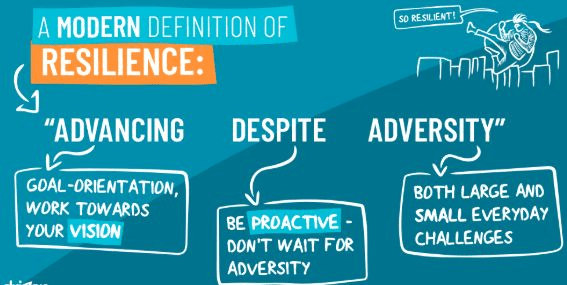
  • Resilience is the quiet strength that carries us through life’s storms. I remember a time when everything seemed to fall apart—my plans uprooted by unexpected challenges. Each morning, I forced myself to rise, even when hope felt thin.


    There is no guarantee that you won’t fall, it’s about how you pick yourself up when you are down and resume the walk with grace. Each of us have resilience in us but demonstrate it in varying intensity based on our coping mechanism, shaped by our experiences, threshold, etc. It is important to know that this is more about: facing setbacks with courage and adapting to change. With every small victory, our confidence grows.

    Today, I look back and realize those difficult days shaped me most. It was my resilience that ‘transformed obstacles’ into stepping stones, teaching me that perseverance and hope can light the way, even during the darkest moments.

  • In today’s fast-changing work environment, upskilling isn’t just a buzzword—it’s a necessity. Investing in learning new skills empowers us to stay ahead, adapt to emerging technologies, and seize new opportunities. Whether it’s mastering a new software, developing leadership abilities, or exploring digital tools, continuous learning fuels both personal and professional growth.


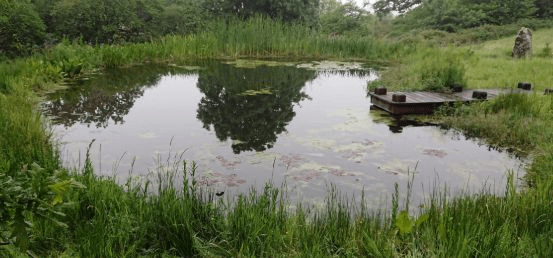
    A classic analogy I can think of is a pond. Pond is the smallest water body, with stagnant water. It can dry up when subject to extreme conditions – becomes a breeding ground for different species.

    When you look at a flowing river, it takes with it different dirt, stones, sand and anything it comes in contact with. Though the currents pick these different aspects from one or more places, they also get rid of them during the flow of the river, probably gathers some valuables along the way. No one wants to swim against the currents, to take on the power of a flowing river in its gushing enormity.

    It is up to you to decide whether you want to be a pond, limited and restricted to what you already know/ have OR if you want to be a flowing river, open to picking up any challenge thrown at you, to keep marching forward.

  • Today’s post is a little longer than my usual but given the topic – I believe all of us can relate & would be willing to invest a few additional reading minutes.

    “What if I failed?” This is a question that each one of us has encountered on a regular basis. Fear of failure or perception of a ‘failed’ attempt or simply an attempt that ‘did not go as expected’. This ties in with my previous 2 posts on overthinking and procrastination as well, as they are part of the problem.

    That question lingered in my mind every time I stood at the edge of something new. When projects didn’t pan out, rapport with people not built, outcome of an assignment did not go as expected, disappointment was real and heavy.

    But gradually, I realized failure wasn’t an ending—it was a lesson, a detour that built resilience and sparked unexpected growth. Not to sound too preachy, but suggestion is to take each setback as a nudge to reflect, adapt, and try again, as we learn from the previous attempt.

    And knowing – IT IS OK TO FAIL. You learnt a new way of ‘how it wont work’ as Thomas A Edison said. (Sorry for the all-caps, there is no ‘Bold’ text option!)

    Below are some quotes that many of us have heard in this context. What is your favorite quote that helps you deal with a ‘Failed attempt’

    “Failure is success in progress.” — Albert Einstein

    “Our greatest glory is not in never failing, but in rising every time we fail.” — Confucius

    “Success is not final, failure is not fatal: it is the courage to continue that counts.” — Winston Churchill

    “If things are not failing, you are not innovating enough.” — Elon Musk

    “I have not failed. I’ve just found 10,000 ways that won’t work.” — Thomas A. Edison

    “If you’re not prepared to be wrong, you’ll never come up with anything original.” — Ken Robinson

  • This is another buzzword doing the rounds. But unlike popular opinion, Procrastination isn’t always about laziness—it’s about avoidance. We delay tasks because they feel overwhelming, uncomfortable, or risky. Yet the longer we wait, the heavier they become.

    What’s the Fix?
    The key to overcoming procrastination is momentum. Small actions break inertia and create progress.

    3-Pointer:
    1. Procrastination stems from fear (failure, imperfection, judgment).
    2. Action reduces anxiety; delay amplifies it.
    3. Breaking tasks into micro-steps builds momentum.

    Practical Steps
    1. Start small: Write one sentence, send one email.
    2. Set deadlines: Self-imposed timelines create urgency.
    3. Reward progress: Celebrate small wins to reinforce action.

    In summary, Procrastination drains energy and opportunity. The fix is simple – act now, even if imperfect.

  • This is a buzzword that I have been hearing a lot in these last few weeks from my tribe.

    “Overthinking”

    The What? 
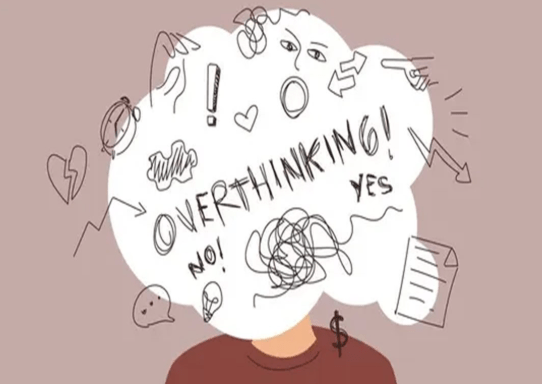
    Overthinking is the habit of dwelling excessively on thoughts, decisions, or possibilities. It traps the mind in #analysis without action, often leading to #stress and #indecision.

    At the start of 2026, I spent days agonizing over a decision that could’ve been made in minutes. By the time I finally acted, the #opportunity had already passed.

    That’s the trap of overthinking: it feels like #progress, but it’s really paralysis.
    #Clarity doesn’t come from endless analysis — it comes from taking the next step.

    So instead of asking “What if?”, try asking “What now?”.
    Small actions compound into big results.

    Progress > Perfection, every single time.

    #Mindset

  • We discussed change, reframing a problem statement, process, approach, style of Operating over the last few days.

    Today, I have a simple question: when was the last time you invested in #yourself ? No task, no objective, just plain self-care. In our daily hustle, we overlook this significant focus area – You (Me!)

    I am not talking about a #vacation, #spaday, #shopping (though all of these definitely count). Simple #moments like – Enjoying a cup of #coffee, a #calm walk (even if for 5 mins), just blankly staring out the window, etc.

    This is a long weekend for folks in India (and folks outside India – get into the Friday spirit!) – can you take out 5-10 mins, #mindfully for yourself? It can be a few moments, just for yourself. Enjoy the moment, feel the ‘aah’ in that.

    #selfcare

  • We hear two words often used interchangeably (and incorrectly so), these days at our workplaces or outside of it. #Approach and #Process – What does each one mean?

    Process refers to a series of actions/ steps taken to achieve a particular end. 
    Approach refers to dealing with a situation in a certain way.

    It is important that we are cognizant of the fact that in our circle, we may have individuals whose style of operating may not be process oriented, but still get the work done. Hence, let us be cautious and ensure inclusive communication to refer to ‘way of work’ as ‘Approach’ instead of ‘Process’. Do you know what is your style of operating?

    There are broadly 3 Styles of operating:
    1. #Process oriented: While some of us may be process driven (to a point of being obsessed with structure)
    2. #Evolve as you move: These are individuals who figure out the sequence of getting stuff done as they move along. Not much of a pre-planning, nor are they too adhoc
    3. #Freewill or Free flow: These are the folks who operate on the fly, more adhoc in nature. They still get the job done, but don’t expect a plan or a structure / sequence. They have a way of getting it done.

    There is no right or wrong in what style you operate on. Your personality determines your style of work, hence no need to #challenge this or #contemplate your own style. It is important that each of you recognize the style in which you operate. This helps you understand why certain points trigger you, put you under pressure, whilst other instances may be a cakewalk, that you glide past.

    Which one is your #workstyle?

    #selfdiscovery#knowyourworth#triggers#efficiency#process#adhoc#leadershipjourney#Skilldify